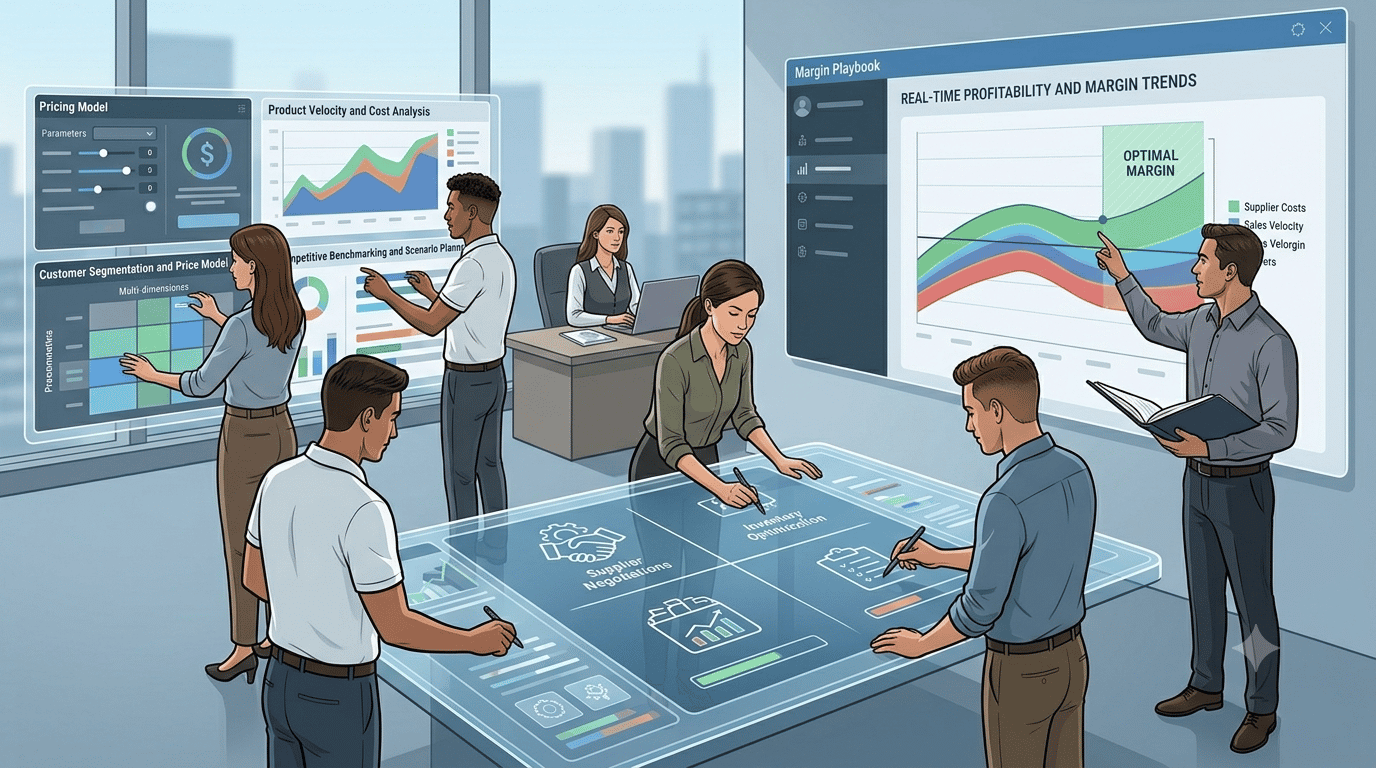
For years, improving margins in distribution followed a familiar formula. Negotiate better supplier pricing. Optimize inventory. Reduce transportation costs. Improve warehouse efficiency. Find opportunities to lower operating expenses.
Those strategies still matter. But today’s market is introducing a different set of challenges. Tariffs, rising labor costs, shifting customer expectations, unpredictable demand, and increasing competition are putting pressure on margins from every direction. Many of these factors are outside a distributor’s control.
The question is no longer just how to cut costs. It is how to build a business that protects margins while continuing to grow. The distributors pulling ahead are beginning to rethink where margin improvement actually comes from.
Margin Is Lost in Small Moments
When people think about margin, they often think about large expenses — freight, inventory carrying costs, warehouse labor. While those remain important, many distributors overlook the hundreds of small operational inefficiencies that quietly erode profitability every day.
A customer waits on hold and places a smaller order. A sales representative spends thirty minutes entering an order instead of visiting another account. An email sits unanswered until the following morning. An order requires multiple follow-up calls because information is incomplete. Individually, these moments seem insignificant. Collectively, they create meaningful pressure on both revenue and operating costs.
Customer Experience Is Becoming a Margin Strategy
Traditionally, customer service was viewed as a cost center. Today, it is becoming a growth strategy. Customers increasingly reward distributors that are easier to reach, faster to respond, simpler to do business with, and more consistent during busy periods.
Those advantages translate into stronger customer retention, larger share of wallet, and more repeat business. Protecting margin is no longer only about reducing expenses. It is also about making it easier for customers to keep buying from you.
Operational Efficiency Has Become a Competitive Advantage
Every repetitive manual task consumes time that could be spent creating value — order entry, following up on missing information, returning phone calls, managing exceptions that could have been resolved automatically. These activities increase operating costs without improving the customer experience.
The most successful distributors are looking beyond traditional cost reduction. They are identifying where operational friction exists and systematically removing it. Every minute saved can be redirected toward sales, customer relationships, or solving more valuable problems.
The Best Investments Improve Both Revenue and Efficiency
Historically, businesses often viewed growth initiatives and cost-saving initiatives as separate investments. Increasingly, the best investments accomplish both. An improvement that helps customers place orders more easily can also reduce manual work internally. A faster response time can improve customer satisfaction while reducing operational bottlenecks.
Technology should not simply automate existing work. It should create leverage across the business. The strongest returns often come from investments that improve both the customer experience and operational performance at the same time.
The New Margin Playbook Is About Resilience
The economic environment is becoming less predictable. Costs fluctuate. Customer demand shifts more quickly. Staffing remains challenging. Waiting for stability is no longer a strategy.
The distributors that perform best are building businesses that remain efficient regardless of changing conditions. They are investing in flexibility, responsiveness, and operational resilience instead of relying solely on cost cutting.
The Opportunity Ahead
Every distributor is facing many of the same external pressures. No one controls tariffs. No one controls labor markets. No one controls economic uncertainty. What businesses do control is how efficiently they operate, how quickly they respond, and how easy they make it for customers to do business with them.
Those decisions increasingly determine who protects margin and who gives it away.
Final Thought
The next generation of high-performing distributors will not simply be the ones with the lowest costs. They will be the ones that create the most operational leverage. They will remove friction instead of adding process. They will improve customer experience while increasing efficiency.
And they will recognize that protecting margins is no longer just a financial exercise. It is an operational strategy.
← Back to all articles