Distribution businesses are under more pressure than ever. Demand is less predictable. Customers expect faster responses. Labor is harder to find and retain. Margins are tighter. Technology is evolving quickly, but the day-to-day reality of operations still feels complex and manual.
Most leaders are asking the same question: what will a winning distribution business actually look like in the next five years? The answer is not a complete overhaul. It is a shift in how operations are designed, how work gets done, and what people spend their time on.
From Reactive to Always Available
Today, most operations are reactive. Orders come in. Teams respond. During peak periods, calls stack up, emails pile up, and customers wait.
In the next five years, the most successful distributors will operate with continuous availability. Customers will not have to wonder if someone will answer. They will not wait on hold or leave voicemails that get processed later. Every request will be handled immediately, regardless of when it comes in. Availability will no longer be a differentiator. It will be expected.
From Manual Intake to Continuous Order Flow
Today, orders arrive in many forms — phone calls, emails, texts, portals, apps. Each requires some level of manual interpretation and coordination before it becomes a clean order in the system. This fragmentation slows everything down.
In the future, the most successful distributors will not try to force customers into a single channel. They will allow orders to come in any way customers prefer, while ensuring that internally, everything flows in a consistent and structured way. Customers will not change how they order. The business will adapt to them.
From People as Process to People as Decision-Makers
A large portion of today's operational work is repetitive. Entering orders. Chasing missing information. Confirming details. Moving information from one place to another. This work is necessary, but it limits how teams can scale and where they spend their time.
In the next phase, the role of people will shift. Instead of acting as the process, they will focus on decisions — handling exceptions, managing relationships, solving problems, and identifying opportunities to grow accounts. The importance of people does not decrease. It increases, but in a different way.
From Fixed Capacity to Flexible Operations
Most operations today are constrained by capacity. The number of orders that can be handled depends on how many people are available at a given time. During peak periods, the system gets stretched. During slower periods, resources are underutilized. This creates inconsistency.
The most successful distributors will build operations that can absorb variability. Whether demand spikes at 9 AM, late at night, or over the weekend, the experience will remain consistent. Customers will not feel the difference between peak and off-peak periods. Flexibility will replace rigidity.
From Hiring for Execution to Hiring for Judgment
This shift changes how businesses think about talent. Today, many roles are centered around execution — order entry, coordination, manual processing. As operations evolve, these responsibilities will decrease.
The focus will move toward hiring people who can make decisions, build relationships, and manage complexity. The skill set will shift from task execution to judgment. This is not just a technology shift. It is a workforce transformation.
Physical Operations Will Continue to Evolve
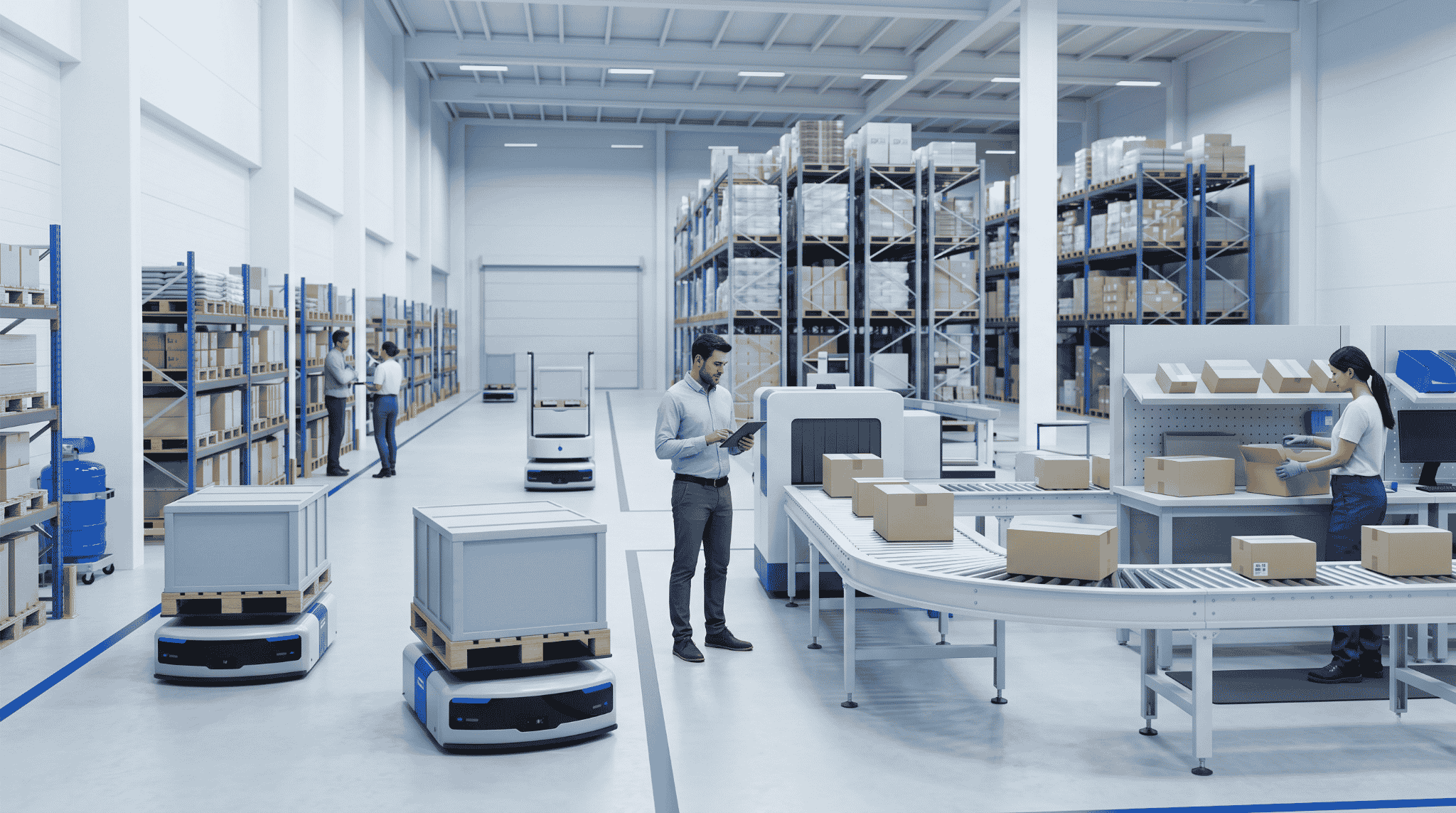
In warehouses, automation will continue to improve. Picking and packing will become more efficient. Robotics will play a larger role, especially in high-volume environments. Over time, systems will become more adaptable and capable of handling a wider range of tasks.
This change will be gradual, not sudden. The biggest gains will come from consistency, accuracy, and throughput, rather than complete replacement of human labor.
The Gap Between Leaders and Everyone Else Will Widen
These changes are not five years away. Elements of them are already visible today. Some businesses are beginning to operate this way. Others are still relying heavily on manual processes and fragmented workflows.
As expectations continue to rise, the gap between those two groups will widen. The businesses that adapt will capture more demand, operate more efficiently, and provide a better customer experience. Those that do not will feel increasing pressure.
Final Thought
The next generation of distribution businesses will not be defined by a single piece of technology. They will be defined by how well their operations align with how customers actually behave, how work actually happens, and how teams can scale without increasing complexity.
The goal is not to add more tools. It is to build a business where everything works together, where customers can interact naturally, and where teams are focused on what matters most. Five years from now, the difference will be clear.
← Back to all articles