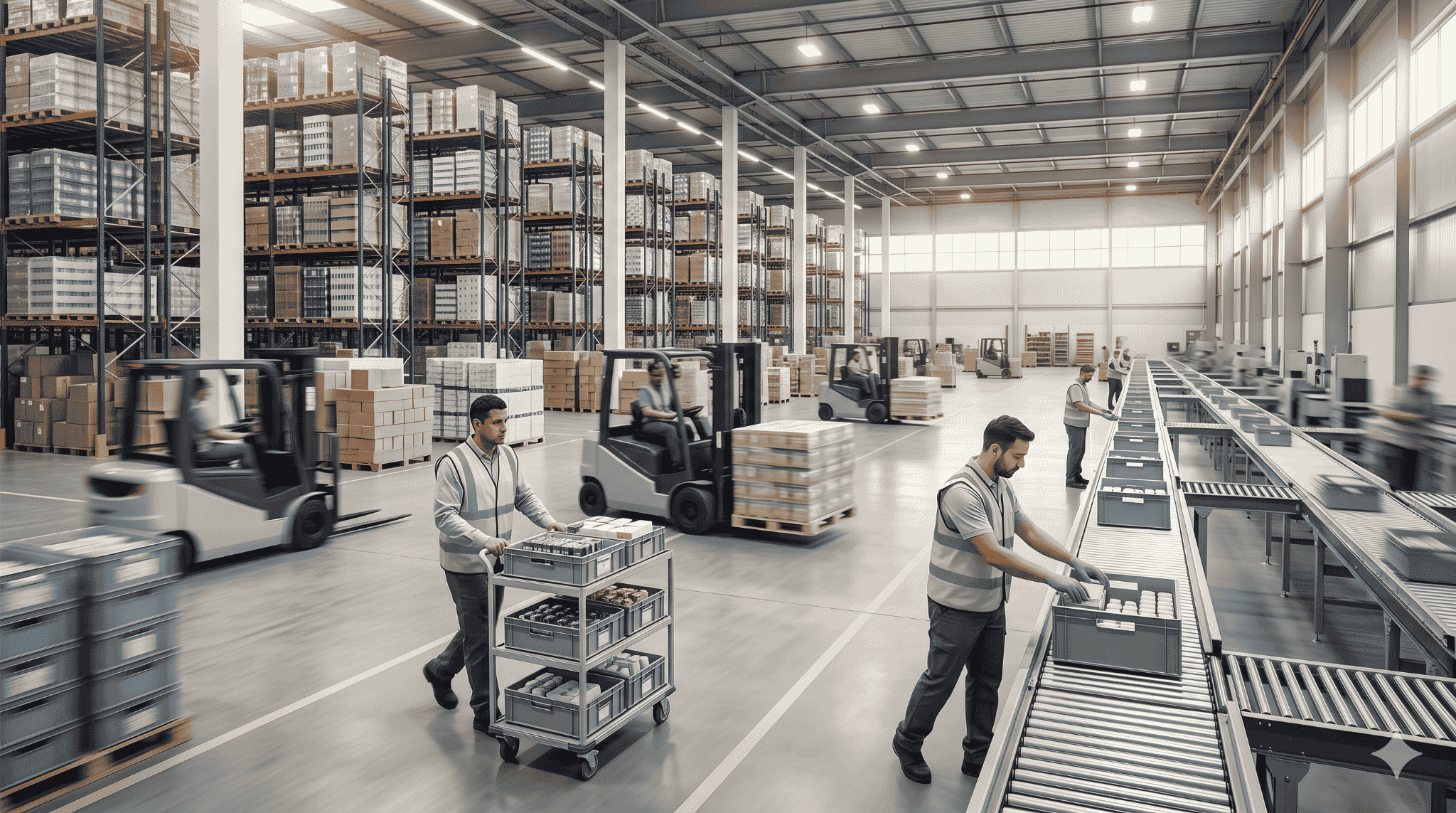
For decades, most distribution businesses were built around predictable rhythms. Orders came in during certain hours. Teams processed them in batches. Customers expected some delay. Operations followed a structured cadence built around warehouse schedules, delivery routes, and business hours.
That model worked because the world moved slower. Today, it does not. Distribution businesses are increasingly operating in real time, whether they are prepared for it or not.
Customer Expectations Have Changed
The biggest shift is not technology. It is expectation. Customers now expect immediate responses, instant confirmations, real-time visibility, faster problem resolution, and continuous availability.
This change did not originate inside distribution. It came from everywhere else. Consumers interact daily with businesses that respond instantly. Information is available immediately. Waiting feels abnormal. Delays feel broken. Those expectations eventually carry over into B2B interactions. Retailers may still place orders by phone, text, or email, but their expectation of responsiveness has changed dramatically.
Orders No Longer Arrive in Predictable Waves
Historically, businesses could rely on fairly stable ordering patterns. Today, demand is far more dynamic. Orders arrive late at night, just before cutoffs, during weekends, and in sudden spikes driven by weather, promotions, or local events.
Retailers are carrying less inventory and reacting faster to changes in demand. That means distributors are increasingly expected to operate with the same flexibility. The challenge is that many operational models were not designed for this level of variability.
The Gap Between Demand and Responsiveness Is Growing
Most distribution operations still depend heavily on human coordination. Calls must be answered. Emails reviewed. Orders interpreted. Exceptions handled manually. Teams often operate at full capacity during peak windows.
When demand spikes, responsiveness drops. Customers wait on hold. Orders sit in inboxes. Voicemails pile up. Small delays compound throughout the day. The issue is not effort — most teams work incredibly hard to keep things moving. The issue is that businesses designed around scheduled workflows are now being pushed toward real-time expectations.
Real-Time Businesses Operate Differently
The most successful distribution businesses over the next five years will think differently about responsiveness. They will not treat availability as a support function. They will treat it as part of the operational core of the business.
That means customers can reach the business anytime, orders can be processed continuously, spikes in demand can be absorbed without service degradation, and communication happens immediately, not eventually. The goal is not speed for the sake of speed. It is reducing friction at the exact moment customers need something.
The Definition of “Good Service” Is Changing
Historically, strong service meant good relationships, reliable deliveries, and knowledgeable reps. Those things still matter. But now, responsiveness itself is becoming part of the service experience.
A distributor that answers immediately, resolves issues quickly, and makes ordering effortless creates a fundamentally different customer experience than one that relies on callbacks, voicemails, and delayed processing. Over time, that difference compounds.
This Shift Changes How Businesses Scale
Real-time operations also change the economics of growth. Traditional models scale by adding people to absorb more activity — more reps, more coordinators, more order desk staff. But as customer expectations continue increasing, this approach becomes harder to sustain.
The businesses that scale successfully will be the ones that can increase responsiveness without increasing operational complexity at the same pace. That requires a different operational foundation.
The Workforce Will Shift Toward Higher-Value Work
As more repetitive coordination becomes automated, the role of people changes. Teams spend less time re-entering information, chasing missing details, and managing routine communication — and more time solving problems, building relationships, managing exceptions, and growing accounts.
The future is not less human. It is human attention focused where it creates the most value.
The Businesses That Adapt Early Will Pull Ahead
This transition is already happening. Some businesses are beginning to operate with real-time responsiveness across ordering, communication, and customer interactions. Others are still structured around delayed workflows and manual coordination.
Over the next several years, the gap between those groups will widen. Customers will increasingly gravitate toward businesses that feel easier, faster, and more responsive to work with — not because the product changed, but because the experience did.
Final Thought
Distribution businesses were not originally designed for a real-time world. But the environment around them has changed. Customer expectations are accelerating. Variability is increasing. Responsiveness is becoming a competitive advantage rather than an operational detail.
The businesses that thrive in the next phase of the industry will not simply process orders more efficiently. They will operate in a way that feels continuously available, adaptable, and responsive to the realities of how customers work today.
← Back to all articles