Your Next Customer May Be an AI Agent
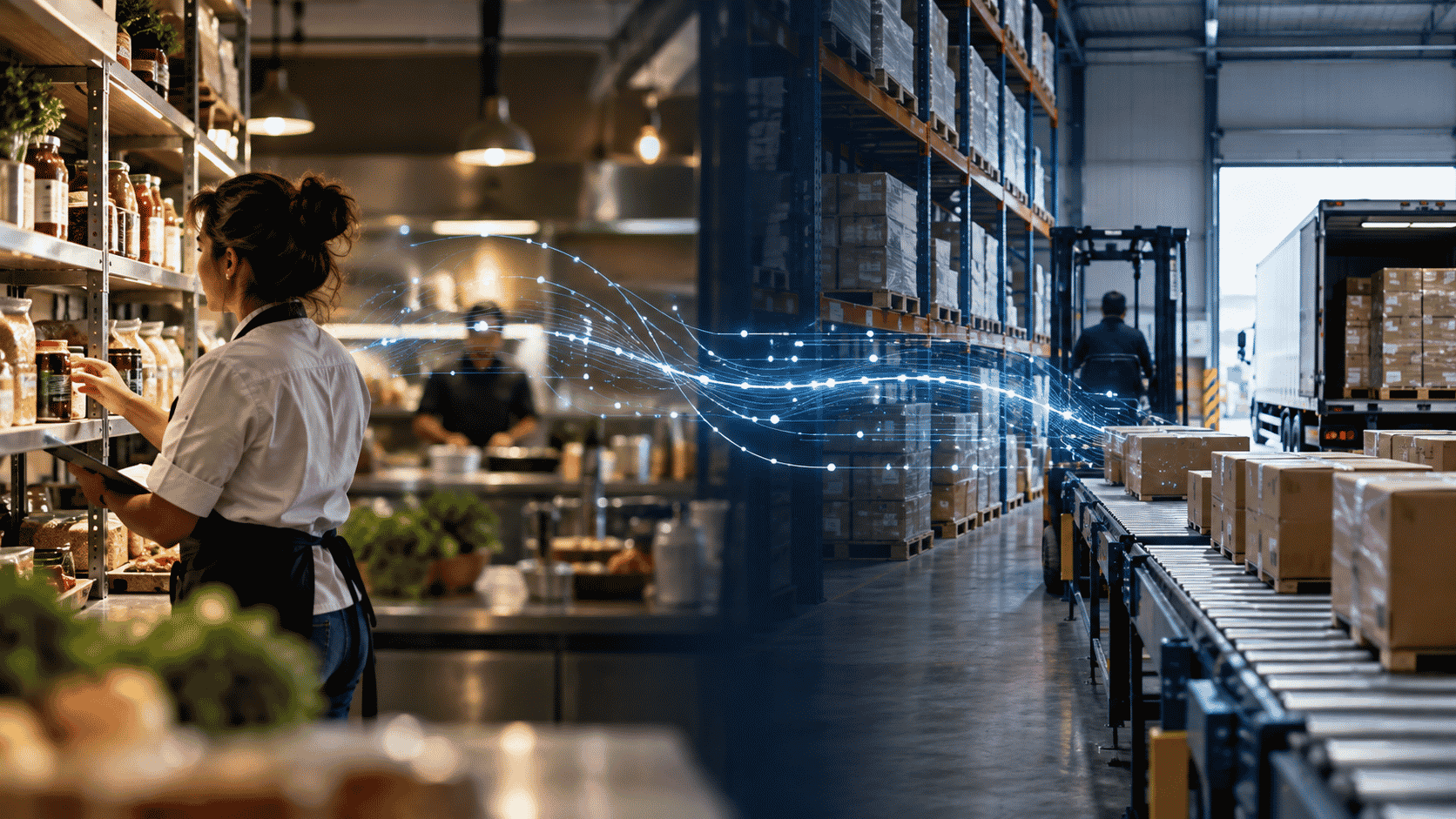
For years, the conversation around AI in distribution has mostly focused on one question: how can distributors use AI inside their own businesses?
That is beginning to change.
A different kind of AI adoption is happening on the other side of the transaction. Retailers, restaurants, procurement teams, and other business buyers are beginning to use AI to research products, compare alternatives, manage inventory, build orders, and increasingly take actions on their behalf.
That creates a very different question for distributors.
What happens when the person placing the next order is not actually a person?
It may sound futuristic, but the underlying pieces are already emerging. AI assistants are moving from answering questions to completing tasks. In commerce, that means the progression from “help me find what I need” to “build the order for me” and eventually “place the order within these parameters.”
For wholesale distribution, that could have significant implications.
Consider how much repetitive decision-making goes into purchasing for a retailer or restaurant.
What is running low? What normally sells this week? What did we order last time? Are any items unavailable? Is there an acceptable substitute? Which supplier has the right product? Does the order meet the minimum? When can it be delivered?
An experienced buyer manages these decisions constantly.
Much of that work also happens according to recognizable patterns.
A restaurant may need roughly the same core ingredients every week with adjustments for reservations, weather, promotions, and inventory. A convenience store replenishes many of the same products repeatedly. A retailer knows its typical sales velocity and reorder points.
Those are exactly the types of workflows where an AI agent can become useful.
Instead of simply reminding a buyer that inventory is low, an agent could identify what needs replenishment, determine the likely quantity, evaluate available options, and present an order for approval.
Eventually, for routine purchases that fall within established rules, the approval step itself may not always be necessary.
The buyer moves from assembling every order to defining how purchasing should work.
This changes something fundamental about the customer relationship.
Today, a customer might call a salesperson, email customer service, visit a portal, or send a text. Even when the interaction is digital, a person is usually driving it.
In an agentic purchasing environment, the customer may increasingly sit one step removed from the transaction.
Imagine a retailer telling its purchasing agent:
“Keep these 200 core items in stock. Prefer our primary distributor, but if an item is unavailable, find an approved substitute within 5% of our normal cost. Don’t exceed $12,000 this week without asking me.”
The agent can operate within those instructions.
It may determine when an order needs to be placed, which products are required, whether a substitution is acceptable, and potentially which supplier should receive the order.
The distributor’s customer is still the retailer.
But the distributor may increasingly interact with the retailer’s software before it interacts with the retailer’s employee.
That is a meaningful change.
Distribution has always been a relationship business, and that is not going away.
A great salesperson understands the customer. They know when an account is expanding, what products might work, how to resolve an unusual problem, and when a customer needs help beyond simply placing an order.
AI purchasing agents do not eliminate that value.
But they could change what determines routine purchasing decisions.
A human buyer might tolerate a slightly cumbersome ordering process because they have worked with the distributor for 15 years. An AI agent does not become frustrated, but it also does not have nostalgia.
It operates according to the criteria it has been given.
Is the product available? What is the price? What substitutions are permitted? Can delivery meet the requirement? Is the information complete enough to make a decision?
This means some of the things distributors have historically considered back-office issues may become customer-facing competitive factors.
Incomplete product data matters more when software is trying to identify the right item.
Slow availability information matters more when an agent is comparing alternatives in real time.
Complex ordering processes matter more when another system is trying to complete a transaction without manual intervention.
The easier a distributor is for machines to understand and transact with, the easier it may ultimately become for customers to buy from that distributor.
For decades, distributors have built product catalogs primarily for people.
A salesperson knows that two slightly different descriptions refer to the same item. An experienced customer service representative understands the customer’s shorthand. A buyer who cannot find something can call and ask.
AI agents will increasingly depend on structured, accurate information.
That means product descriptions, pack sizes, attributes, availability, substitutions, pricing rules, delivery information, and customer-specific terms become more important.
A product that exists in the warehouse but cannot be confidently understood by a purchasing agent may effectively become harder to buy.
This does not mean every distributor needs to rebuild its entire technology stack tomorrow.
It does mean product and customer data are becoming more than internal operational assets.
They are becoming part of how customers discover and transact with the business.
The most interesting version of this future is not humans talking to AI.
It is AI talking to AI.
A customer’s purchasing agent might ask: “Do you have 12 cases of this SKU available for Thursday delivery?”
The distributor’s system responds with availability.
“Only eight are available. Would you like the approved substitute for the remaining four?”
The purchasing agent checks its rules. “Yes, provided the substitute is within our pricing threshold.”
The distributor validates pricing, confirms delivery, and submits the order.
No one needed to copy an email into an ERP. No one waited on hold. No one opened a portal and searched through a catalog.
The transaction simply moved between two organizations according to the business rules each had established.
This is where the term agent-to-agent commerce becomes interesting for distribution.
Distributors are beginning to think about AI agents that work for them. Their customers will increasingly have agents working for them too.
The order desk of the future may therefore need to serve both humans and machines.
None of this means purchasing becomes fully autonomous overnight.
Distribution is full of exceptions.
The requested item is unavailable. The customer wants something outside normal purchasing rules. Pricing requires approval. The quantity is unusual. A substitute is technically valid but probably wrong for this particular account.
Those are exactly the situations where people remain valuable.
The more routine transactions that software can handle, the more human attention can move toward the transactions where judgment, relationships, negotiation, or creativity actually matter.
That may ultimately be one of the biggest changes agentic commerce brings to B2B purchasing.
People do not disappear from the process.
They become less involved in the parts of the process that never required much human judgment in the first place.
Most distributors evaluating AI today are asking where they should deploy it internally.
Can it make the sales team more productive? Can it help customer service? Can it improve purchasing? Can it automate routine administrative work?
Those are important questions.
But another question is emerging:
What happens when our customers deploy AI faster than we do?
A distributor may decide it is comfortable waiting another few years to change its own processes.
Its customers may not make the same decision.
If buyers increasingly expect AI to manage replenishment, compare options, resolve routine substitutions, and execute purchases, distributors will need to be capable of participating in that workflow.
The timetable may not be set entirely by the seller anymore.
It may increasingly be set by the buyer.
For most of the history of distribution, commerce has happened between people. A buyer contacted a salesperson. A restaurant manager called customer service. A retailer sent an order to someone they knew at the distributor.
Those relationships will continue to matter.
But another participant is entering the relationship.
The customer’s AI.
It may begin by helping build an order. Then it may recommend products. Eventually it may place routine orders, resolve simple issues, and manage replenishment without requiring the customer to initiate every transaction.
Distributors are spending a lot of time deciding where to deploy their own AI agents.
They may soon need to ask a different question:
Are we ready to do business with our customers’ agents?
Ordana handles orders from your customers today — and is built to handle orders from their agents tomorrow.